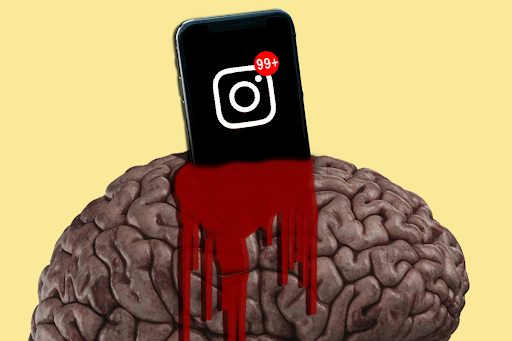
Your Feed Looks Polished, But It’s Pointless
Let’s be honest. Your social media “strategy” probably looks a lot like this: a color-coordinated feed, a few trending audios, and a folder full of Canva templates you recycle every quarter. Everything looks polished, but your engagement is stuck, your leads are nonexistent, and your social presence is more decorative than strategic. You’re not running a social strategy, you’re curating a digital scrapbook.
This is the trap too many brands fall into. They confuse consistency with effectiveness, aesthetics with authority, and vibes with value. Pretty posts might get likes, but likes don’t pay the bills. According to a report from HubSpot (via a wider report on social media ROI), 44 % of marketers say measuring the ROI of social media is their biggest challenge. That’s because most aren’t even trying, they’re just posting to “stay visible.”
Here’s the cold truth: if your content doesn’t tie back to your goals, it’s not content marketing. It’s content clutter. Social media isn’t about what looks good on your grid, it’s about what moves your audience closer to action. The brands winning right now aren’t prettier, they’re sharper. They know who they’re talking to, why they’re talking, and what they want their audience to do next. Your Canva templates might make your feed look cohesive, but strategy makes it convert. It’s time to ditch the vibes and build a real plan.
Likes Don’t Pay the Rent
Likes are nice. Comments feel good. Shares stroke the ego. But none of them pay your team, cover ad spend, or grow your business. Vanity metrics are a marketer’s comfort food: easy to digest, immediately satisfying, and ultimately empty. According to Sprout Social in their 2025 ROI statistics, only 30 % of marketers believe they can accurately measure social media ROI, even though 65 % of marketing leaders say they want to see direct connections between social efforts and business goals.
Think about it: what’s the point of getting 10,000 likes on a post if none of those people ever buy from you? Engagement is only valuable if it aligns with a measurable objective. Too many brands treat social media as a popularity contest when it’s really a behavioural lab. Every post should be testing how your audience thinks, feels, and acts.
Take Wendy’s, for example. Their Twitter presence isn’t just entertaining, it drives brand affinity and sales. When they interact with fans, it’s not random banter. It’s personality-driven marketing that reinforces awareness and loyalty. Meanwhile, most brands are still celebrating “record impressions” on posts that didn’t move a single lead.
Vanity metrics trick you into thinking you’re making progress because they look impressive. But they’re the business equivalent of running in circles. If your reports focus on engagement rates without connecting to leads, clicks, or conversions, you’re not strategising, you’re self-soothing. Social media should feed your funnel, not your ego.
Your Canva Templates Are Killing Your Credibility
If your feed looks like every other brand in your niche, congratulations—you’ve officially blended in. Canva templates have democratized design, but they’ve also homogenized creativity. Every brand’s posts now look like a beige aesthetic clone. The problem isn’t Canva, it’s relying on it instead of defining your own visual and verbal identity.
According to Stanford’s Web Credibility Research, nearly half of consumers assess the credibility of websites based on visual design, layout, typography and colour schemes. The same principle applies to social media. Your visuals signal whether you’re trustworthy, authoritative and worth following. Templates might make your posts look “professional,” but they also make you forgettable.
Look at how Duolingo built an empire on chaos. Their TikTok presence breaks every design rule: no matching colours, no branded graphics, just raw, personality-filled content that feels human. Their mascot “Duo” dances, jokes, and occasionally gets unhinged, but it works because it feels authentic. People don’t follow Duolingo for grammar tips, they follow for entertainment that happens to teach.
That’s what trust looks like in 2025. It’s not about being polished, it’s about being consistent. It’s showing up with the same tone, values and energy across every post. Your followers aren’t craving perfect, they’re craving familiar. If your feed looks flawless but feels hollow, you’ve optimised for aesthetics and sacrificed authenticity. People don’t buy from brands they admire. They buy from brands they trust.
No Funnel, No Strategy
Posting on social without a conversion path is like fishing without a net. You might get attention, but you’ll never catch anything that matters. The goal of social media isn’t to collect followers, it’s to turn attention into action. That requires a funnel, not just a feed.
According to Statista, only about 2 % of users convert directly from social media interactions. The rest need a nudge: an email, a remarketing ad, or a landing page that turns curiosity into commitment. The best brands understand that social media is just the entry point, not the finish line.
Take Glossier as an example. Their Instagram doesn’t just promote products, it promotes community. Every post leads somewhere: a tagged product, a customer story, or a link to join their mailing list. Glossier’s funnel is subtle but intentional. They turn every moment of engagement into a micro-conversion that builds loyalty over time.
Most businesses, however, waste their reach. They link every post to their homepage instead of a targeted offer or relevant resource. That’s like inviting someone to dinner and handing them a map of your entire city. No one has time for that. Every post should have a purpose, every purpose should have a destination, and every destination should drive measurable outcomes. Without a funnel, you’re not doing marketing, you’re performing content theatre.
Stop Guessing, Start Measuring
Let’s talk about the most dangerous phrase in marketing: “We’re just posting what feels right.” That’s not a strategy, it’s a mood. Intuition has its place, but relying on it without data is like flying blind. You might get lucky, but you won’t get consistent.
According to Hootsuite, brands that use analytics tools are 2.3 times more likely to outperform competitors in engagement and audience growth. Data tells you when your audience is active, which content converts, and what formats actually drive results. It takes the guesswork out of growth.
Consider how Netflix approaches content marketing. Every post, trailer and tweet is backed by audience data. They test tone, timing and creative angles relentlessly. When their posts go viral, it’s not luck, it’s engineering. They know exactly what hooks people because they’ve analysed it, iterated on it, and built systems around it.
That said, data without creativity is just noise. Metrics can tell you what’s working, but not why it works. The best social strategies use analytics to sharpen intuition, not replace it. Test your instincts, track your results, and let the numbers validate the vibe. It’s not art versus science. It’s art informed by science. You can’t control what resonates, but you can measure what converts.
You Don’t Need More Posts, You Need a Plan
Your social media strategy can’t run on vibes forever. Pretty posts and catchy captions might get you noticed, but they won’t get you paid. Strategy isn’t about designing content that looks good, it’s about creating systems that perform.
The next time you plan your content, start with the question: “What do I want my audience to do after this?” If you don’t have an answer, you don’t have a strategy. Audit your feed, track your outcomes, and tie every post to a business goal. Build funnels, not follower counts. Optimise for relationships, not reach.
Remember: the algorithm doesn’t care how your grid looks. It cares how your audience behaves. You don’t need to post more, you need to post smarter. Social media is no longer a stage for brands to perform. It’s a marketplace for brands to prove they’re worth the click.
If your social media strategy still feels like an aesthetic exercise instead of a business plan, it’s time to grow up and get strategic. The vibes got you followers. The plan will get you paid.