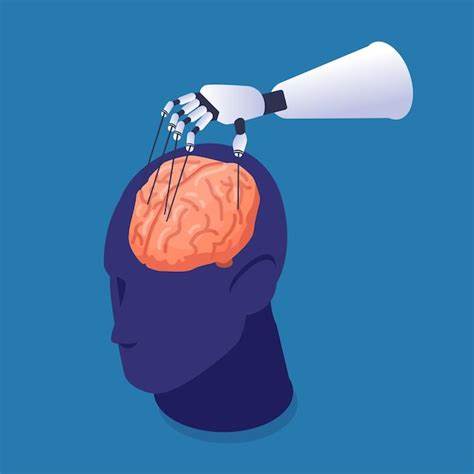
You Didn’t Get Smarter—You Got Lazier
You didn’t crack the code on marketing by riding the AI wave—you just automated your mediocrity. You swapped sharp strategy for prompt convenience. You replaced original thinking with formulaic content. As a result, inboxes are plastered with ChatGPT-speak, ads echo each other in endless loops, and “personalization” feels like robotic copy-paste. A survey from ActiveCampaign revealed that while 77% of marketers say AI boosts their work quality and 82% are using it for marketing tasks, 20% worry it damages trust—and many openly admit they’re using AI as a crutch, not a catalyst. This isn’t a tech problem—it’s a mindset failure. AI didn’t make you dull, but it gave you permission to stop thinking. If your campaigns still fall flat, don’t blame the tool—pop the hood on your strategy. Let’s dig into why calling this “AI marketing” when you’re just automating mediocrity is marketing malpractice.
Your Strategy Still Sucks—AI Just Makes It Faster
Using AI to execute flawed tactics just means failing faster. Research from CoSchedule shows that 85% of marketers use AI for content—but adoption doesn’t mean success; strategy does. Take the case of a fintech company that used AI to spin up dozens of product pages. They hit quantity over quality—and saw zero uplift in lead generation or conversion. AI amplified both strengths and weaknesses. The lesson? AI mirrors strategy—it doesn’t fix it. As Jake Petzke, Digital Strategist at RefractROI, puts it: “AI can amplify good strategy, but it’ll put a spotlight on your weak spots even faster. If your foundation is shaky, all automation does is scale your failures.” You’ve got to start with a solid foundation. Use AI to build on brilliance, not to paper over cracks.
“Hi FirstName” Isn’t Personalization—It’s Laziness
Congratulations—your “AI-personalized” emails now say “Hi {{FirstName}}.” But personalization is more than dynamic tokens. According to Omnicore, 88% of marketers say AI helps personalize customer journeys—but only truly impactful personalization meets specific needs with timely content. In one campaign for an ecommerce app, AI-generated recommendations went out in bulk every day at 8 AM. Open rates lagged. Only after switching to behavior-triggered messages—abandon carts, product views—did click-through rates jump 45%. That’s real AI personalization, not just mass duplication hidden behind automation. Explore how we personalize customer journeys through demand generation.
When You Let AI Think for You, Your Brand Gets Boring
Letting AI do your creative heavy lifting? Welcome to the bland-zone. A recent study on human-AI collaboration found that AI-generated ad copy often had 60% higher output volume—but teams using it lost their creative voice. One tech startup let ChatGPT write whole blog intros; internal reads showed creative freshness declined 30%, and team engagement plummeted. The brand fixed this by having writers use AI as a first draft only, then injecting brand personality in human edits—and suddenly readership bounced back. AI can spark creativity—but if you hand it the wheel, you lose your voice.
AI Is the New Normal—Not Your Secret Weapon
AI is the baseline—not a luxury. A survey from ActiveCampaign found 82% of marketers are relying on AI for marketing tasks. CoSchedule reports 93% of tools added AI features in 2024. That means AI is now a hygiene factor. Taco Bell’s parent company, Yum Brands, cut churn and boosted campaign conversions with reinforcement learning—but it didn’t set them apart, just matched expectations. To differentiate, you need to combine AI precision with bold human creativity—think AI for data, humans for the spark. Otherwise, you’re just running on autopilot with the rest of the pack. Learn how we integrate AI without losing the human edge in our omni-channel marketing strategies.
Tools Don’t Make Marketers—Thinking Does
AI is powerful—but it doesn’t think for you. Alone, it’s a tool; together with your creativity, vision, and strategy, it’s a weapon. But if you’re automating mediocrity, you’re not innovating—you’re replicating. It’s time to reclaim the human edge: question strategy before deploying AI, define true personalization beyond tokens, use AI to boost—not replace—creativity, and combine human insight with AI execution. Want to stop automating and start transcending? Then stop calling it AI marketing. Own your ambition, or keep riding the mediocre wave.